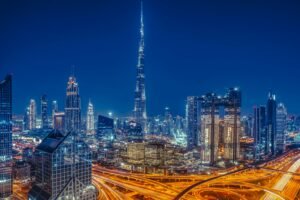
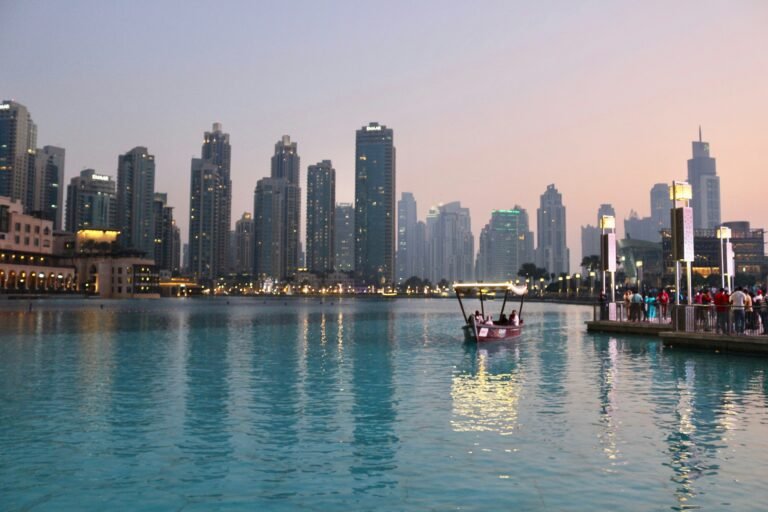
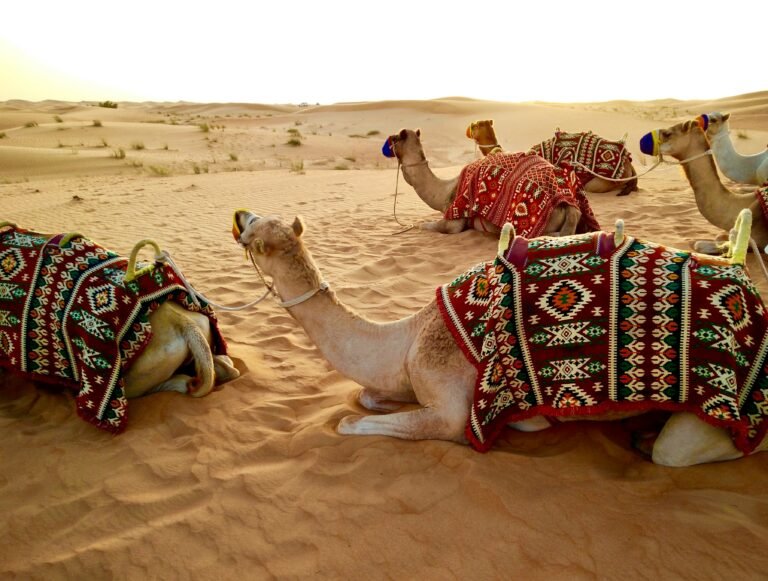
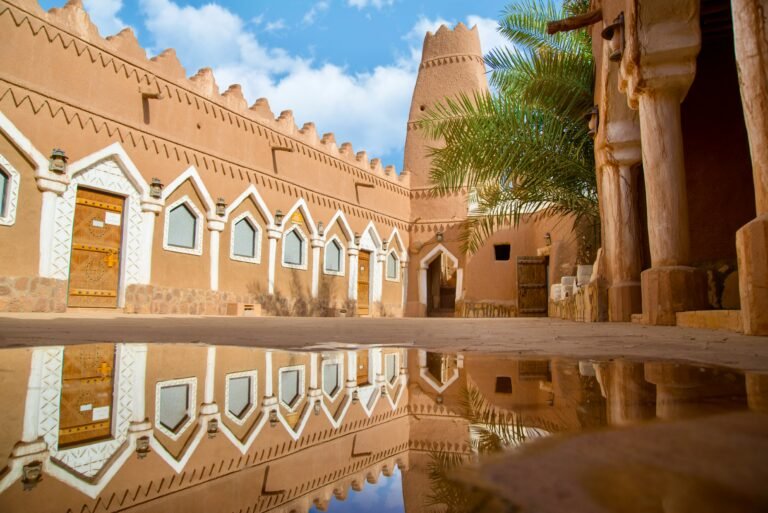
Dubai is a city that simply should not exist — a megalopolis of glass, steel, and ambition rising from the desert at the edge of the Arabian Gulf, a place that has transformed itself in just a few decades from a small fishing and pearl diving settlement into one of the most recognizable and visited cities in the entire world. And yet here it is, more real and more extraordinary than anything you could have imagined. The Burj Khalifa, the tallest building in the world at over 828 meters, dominates the Dubai skyline with a presence that is almost gravitational — and taking the elevator to the observation deck on the 124th floor to look out over the city, the desert, and the Gulf stretching away to the horizon is one of those experiences that puts the sheer audacity of human ambition into startling perspective. The Palm Jumeirah, a man-made island in the shape of a palm tree extending into the Gulf and visible from space, is home to some of the world’s most luxurious hotels and residences — including the iconic Atlantis resort, which sits at the very tip of the palm and offers an experience of extravagant hospitality that is quintessentially Dubai. The Dubai Mall, one of the largest shopping centers ever built, contains not only hundreds of stores but also an indoor ice rink, an enormous aquarium, a dinosaur skeleton, and a waterfall — because in Dubai, nothing is ever done by halves. And yet for all its modernity and excess, Dubai also preserves something of its past in the atmospheric Al Fahidi historical neighborhood, where wind-tower houses and traditional souqs offer a glimpse of the older, quieter city that existed before the skyscrapers arrived.