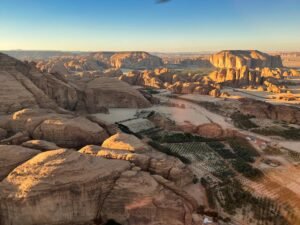
AlUla is one of the most breathtaking and least discovered destinations in the world — a place of such extraordinary natural beauty and historical significance that the only question after visiting is why it took you so long to get there. Located in the northwest of Saudi Arabia, this ancient oasis valley has been inhabited continuously for thousands of years, and the layers of civilization it contains are nothing short of remarkable. The Nabataean city of Hegra, also known as Madain Saleh, is Saudi Arabia’s first UNESCO World Heritage Site — a collection of more than 100 monumental tombs carved directly into rose-colored sandstone outcrops that rise dramatically from the desert floor. Dating back more than two thousand years, these tombs are in an extraordinary state of preservation, their facades decorated with intricate carvings of eagles, snakes, and Nabataean inscriptions that tell the stories of the people buried within. The landscape of AlUla itself is like nothing else on earth — vast rock formations sculpted by millions of years of wind and water erosion into shapes of impossible beauty, rising above a valley of date palms and ancient ruins that create a panorama of almost hallucinatory grandeur. Elephant Rock, a natural sandstone formation that bears an uncanny resemblance to a giant elephant extending its trunk to the ground, has become one of Saudi Arabia’s most iconic natural landmarks, and seeing it in the golden light of sunset is an experience of pure, simple wonder.